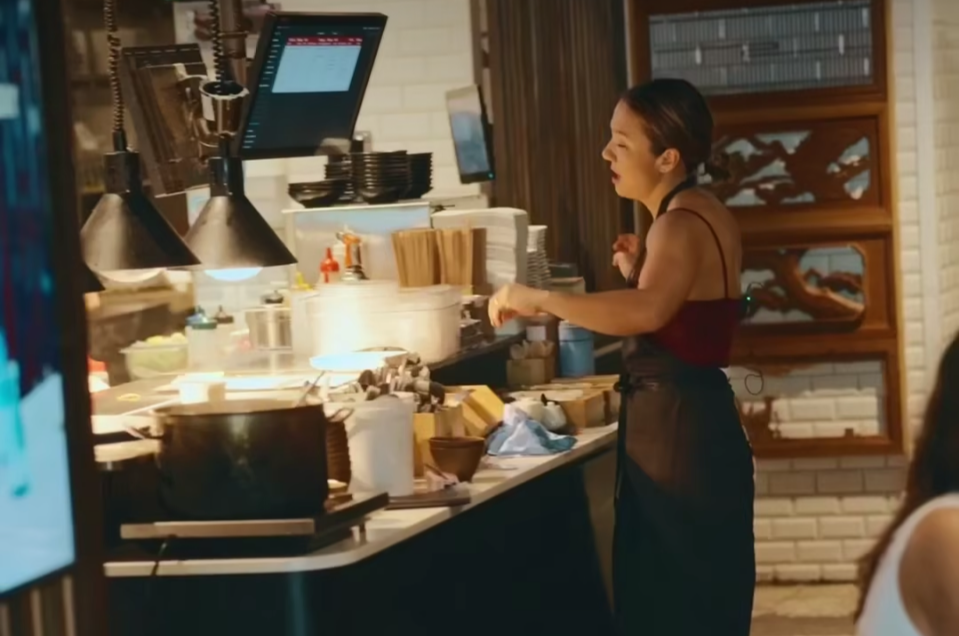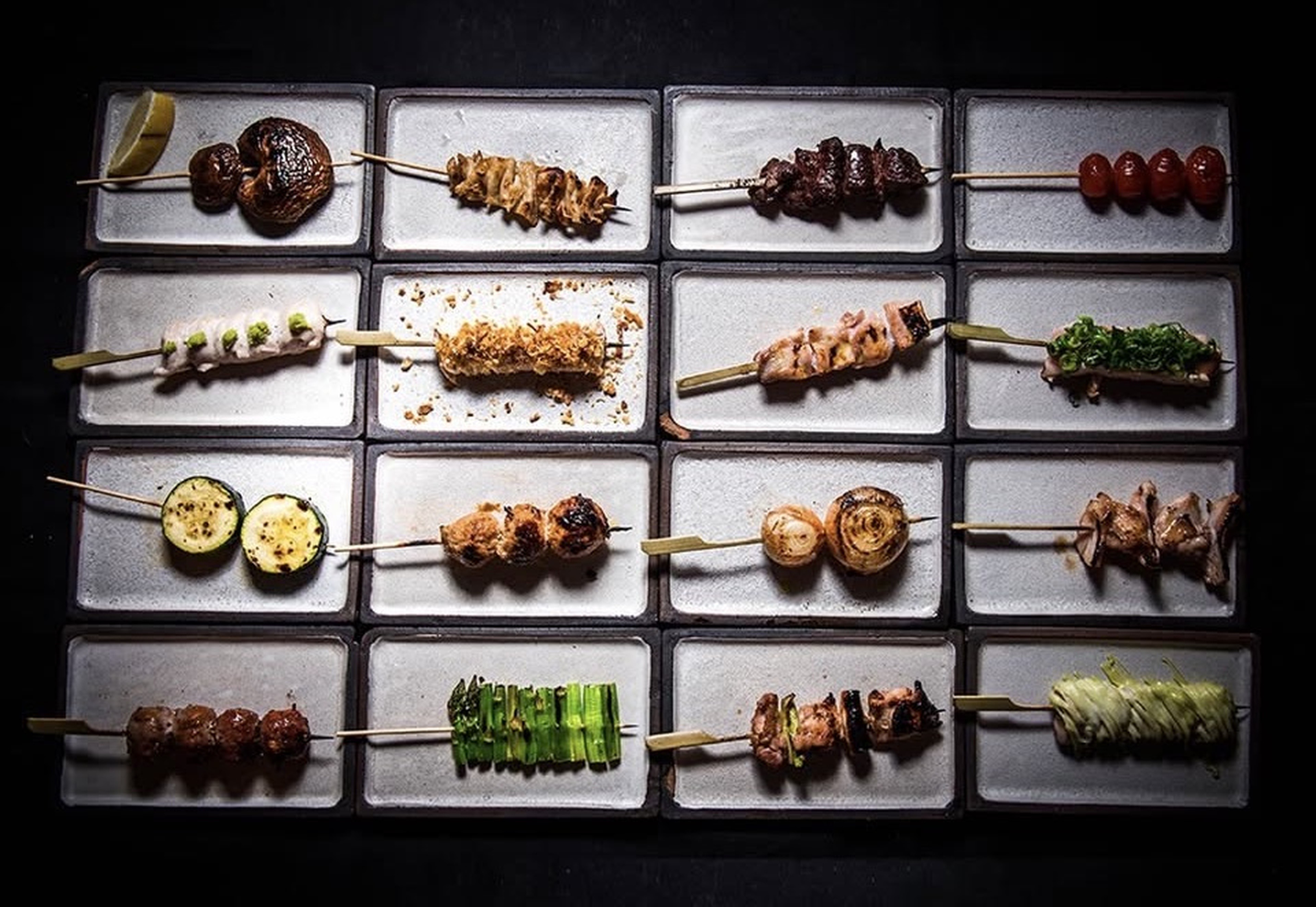


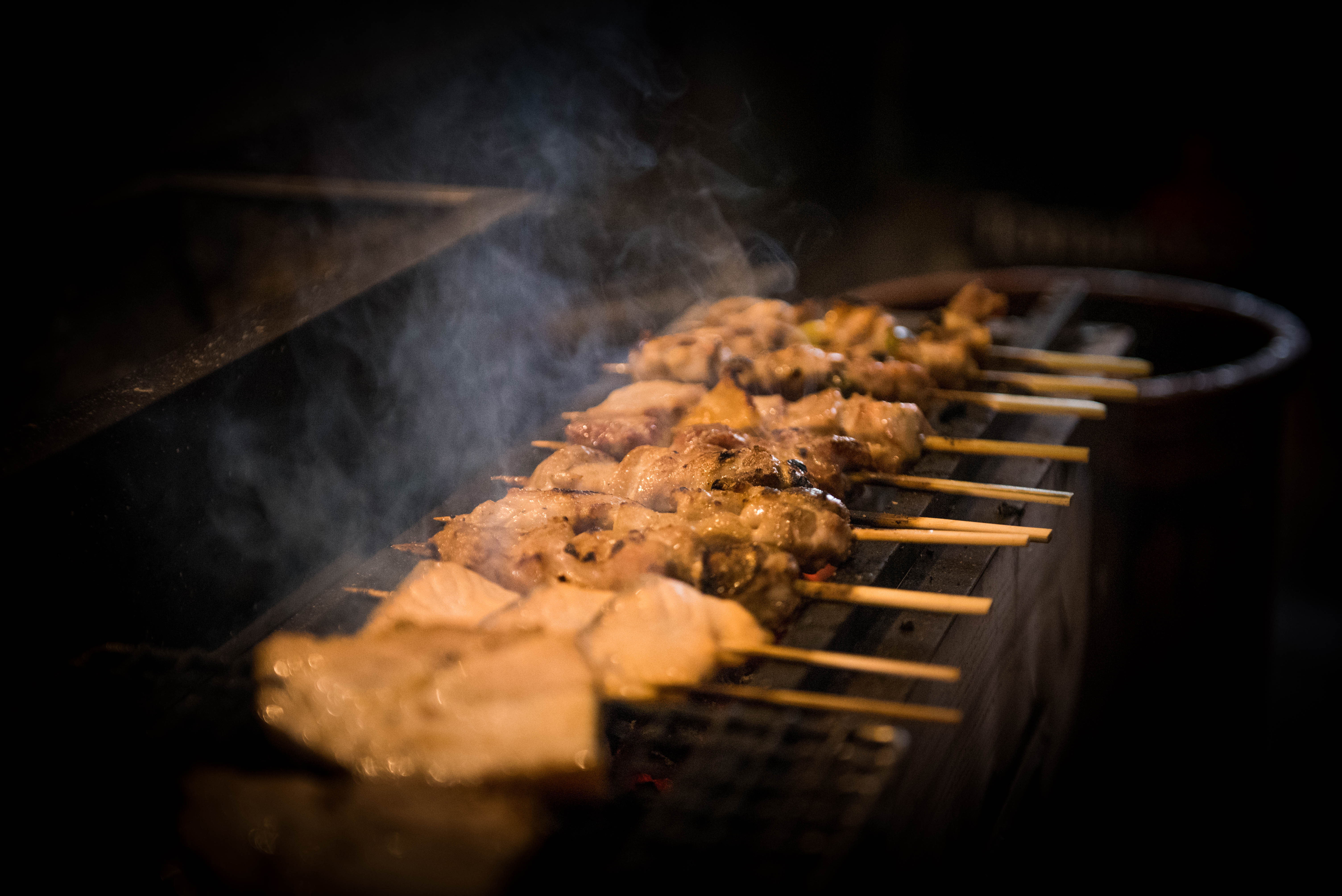
Walk past Bird's Nest on any evening and you'll notice something distinctive before you even see the restaurant—that clean, aromatic smoke
drifting through the air. It's not the heavy, acrid smell of a backyard barbecue. It's something purer, almost sweet, unmistakably inviting.
That's the scent of binchotan charcoal at work, and it's one of the most important factors separating authentic yakitori from ordinary
grilled chicken.
After nearly 13 years of grilling yakitori, I can tell you with certainty: the charcoal matters. It's not just fuel—it's a fundamental
ingredient that shapes flavour, texture, and the entire yakitori experience. Understanding binchotan helps explain why authentic yakitori
tastes the way it does, and why it commands the prices it does.
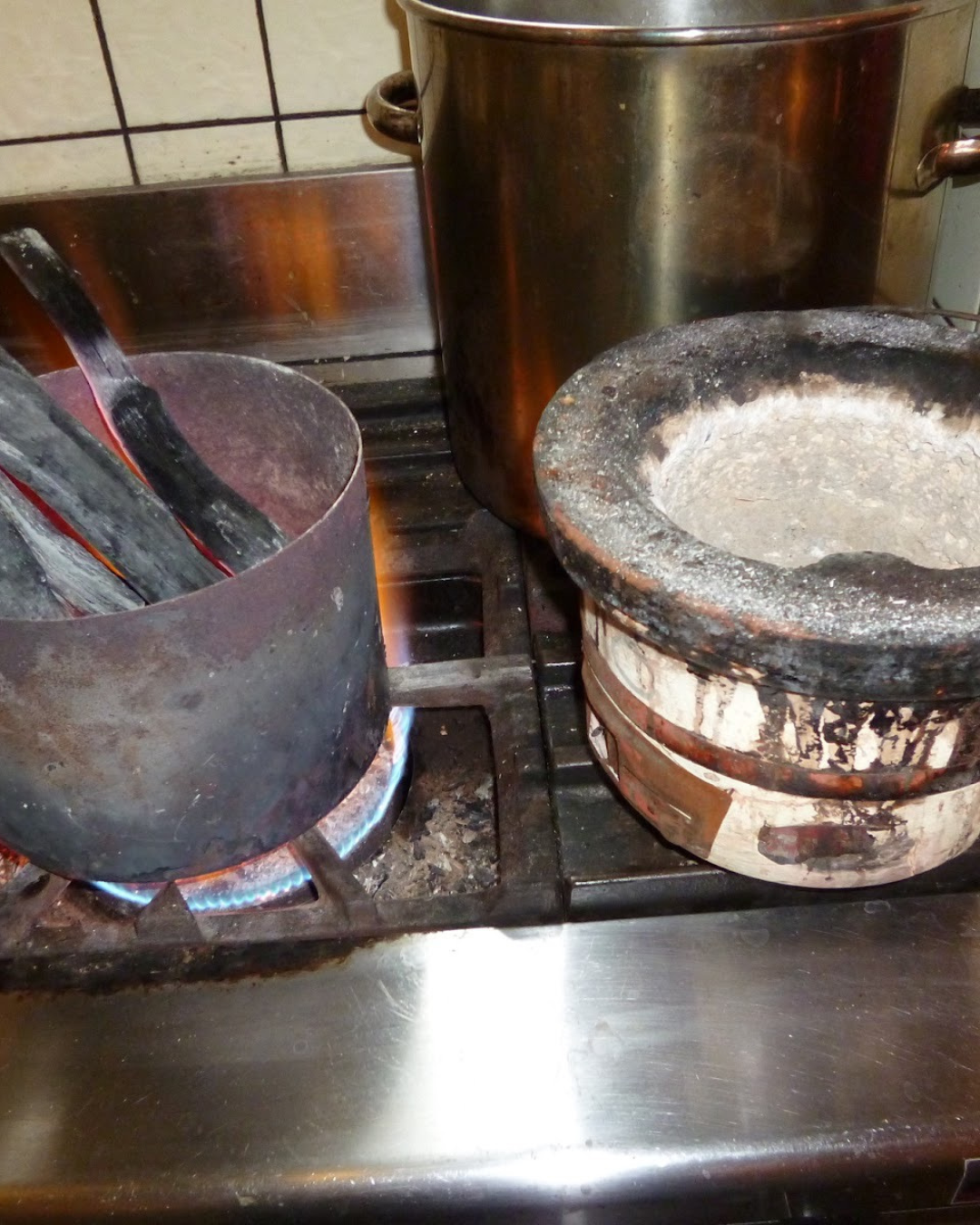
Binchotan is premium white charcoal, traditionally made from ubame oak through an ancient Japanese process that's remained largely unchanged for centuries. The wood is slowly carbonized in earthen kilns at relatively low temperatures for about two weeks, then finished at extremely high heat before being rapidly cooled with a coating of earth and ash. This process creates charcoal that's incredibly dense, burns extraordinarily hot, and produces minimal smoke or flame.
When you strike two pieces of binchotan together, they ring with a clear, metallic sound—almost like ceramic. This density is what gives binchotan its remarkable properties. It's so hard that it can be difficult to light initially, but once burning, it maintains consistent, intense heat for hours.
The name "white charcoal" comes from its appearance after the finishing process. The ash coating gives it a distinctive whitish-grey
exterior, quite different from the familiar black charcoal you'd find at a hardware store.
Here's where binchotan becomes truly special: it burns at approximately 1000 degrees Celsius. To put that in perspective, regular charcoal typically maxes out around 600-700 degrees. That 300-400 degree difference fundamentally changes how food cooks.
At these extreme temperatures, the exterior of the chicken sears almost instantly, creating that beautiful char and locking in moisture. The intense radiant heat cooks the meat quickly and evenly without the need for direct flame. This is crucial—direct flame can create hot spots, uneven cooking, and that acrid, sooty taste you sometimes get from conventional grilling.
Binchotan provides what we call "indirect heat." The charcoal glows intensely, radiating consistent heat without producing flame. This
allows for precise temperature control and even cooking that's simply impossible with lesser fuels. When you bite into properly grilled
yakitori, the outside has that slight crispness while the interior remains tender and juicy. That textural contrast is the direct result of
binchotan's extreme heat.
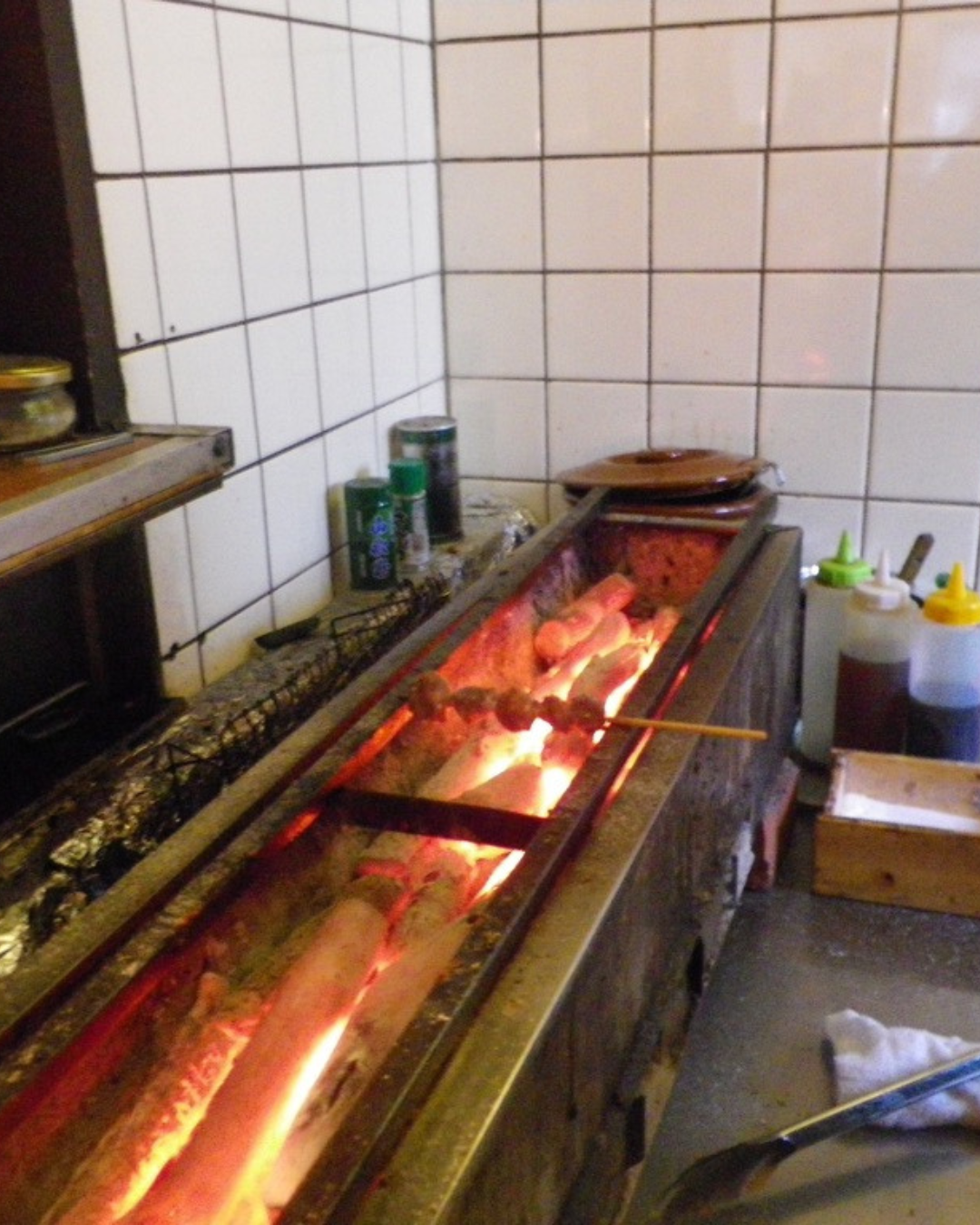
One of the most common compliments we receive at Bird's Nest is about how juicy our yakitori is. Customers are often surprised that grilled chicken can be this moist, this tender. The secret isn't a marinade or brine—it's the speed and method of cooking over binchotan.
Because the surface sears so quickly at 1000 degrees, it creates a crust that seals in the natural juices. The meat cooks rapidly enough that moisture doesn't have time to escape. With lower-temperature grilling methods, meat spends more time on the heat, giving moisture more opportunity to evaporate. The result is drier, tougher chicken.
This is particularly important for leaner cuts like sasami (tenderloin), which can easily become dry and stringy when grilled conventionally. Over binchotan, even the leanest cuts stay succulent because they're exposed to that intense heat for just the right amount of time.
Not all smoke is created equal. The heavy, grey smoke from cheaper charcoals comes from impurities, chemicals, and incomplete combustion. It can impart bitter or acrid flavours to food. Binchotan, being almost pure carbon after its intensive production process, produces remarkably little visible smoke and virtually no unpleasant odours.
What you smell near our restaurant isn't smoke in the conventional sense—it's the aroma of chicken fat and natural juices hitting superheated charcoal, creating those complex, savoury notes that make your mouth water. It's clean, aromatic, and incredibly appealing. We've had people tell us they can smell Bird's Nest from down the street, and it draws them in every time.
This clean combustion is also why binchotan doesn't leave that sooty residue on food that you might get from other grilling methods. The
flavour that transfers to the yakitori is pure and subtle—a gentle smokiness that enhances rather than overwhelms the natural taste of
quality chicken.
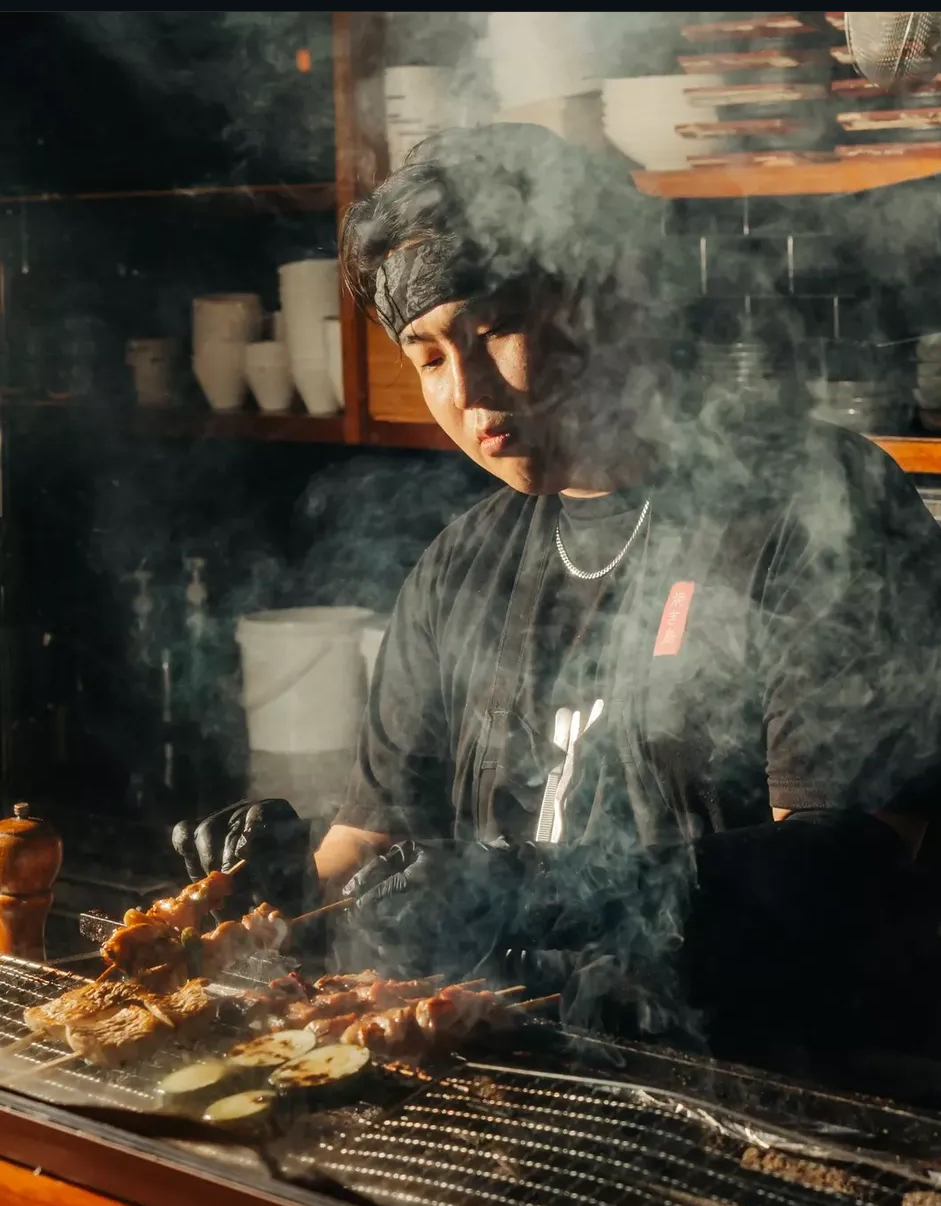
Here's something customers rarely see: binchotan is genuinely difficult to work with. It requires specific training and considerable skill to use properly. This isn't something you can hand to any cook and expect good results.
Lighting binchotan is an art in itself. Its density makes it resistant to ignition. You can't just strike a match and expect it to catch. It requires specialized lighting equipment and patience—sometimes 30-40 minutes to get it properly started. Once lit, however, it burns steadily for hours, maintaining that crucial consistent heat.
Temperature control is nuanced. While binchotan provides steady heat, managing that 1000-degree environment requires understanding exactly how close to position each skewer, how often to rotate them, and how to read the subtle cues that tell you when meat is perfectly cooked versus seconds away from burnt. The margin for error is small when working with such intense heat.
Every cut of chicken requires different handling. Fatty cuts like momo (thigh) can withstand slightly closer proximity to the heat and longer cooking times. Lean cuts like sasami need more careful attention. Skin needs to be positioned just right to crisp without burning. Offal like liver or heart requires precision timing to maintain the proper texture.
At Bird's Nest, our grill chefs train specifically on working with binchotan. It's not something you learn overnight. The learning curve is
steep, and mistakes are immediately obvious—burnt exteriors, undercooked interiors, or worst of all, dry meat. Mastering the binchotan grill
takes time, focus, and dedication.
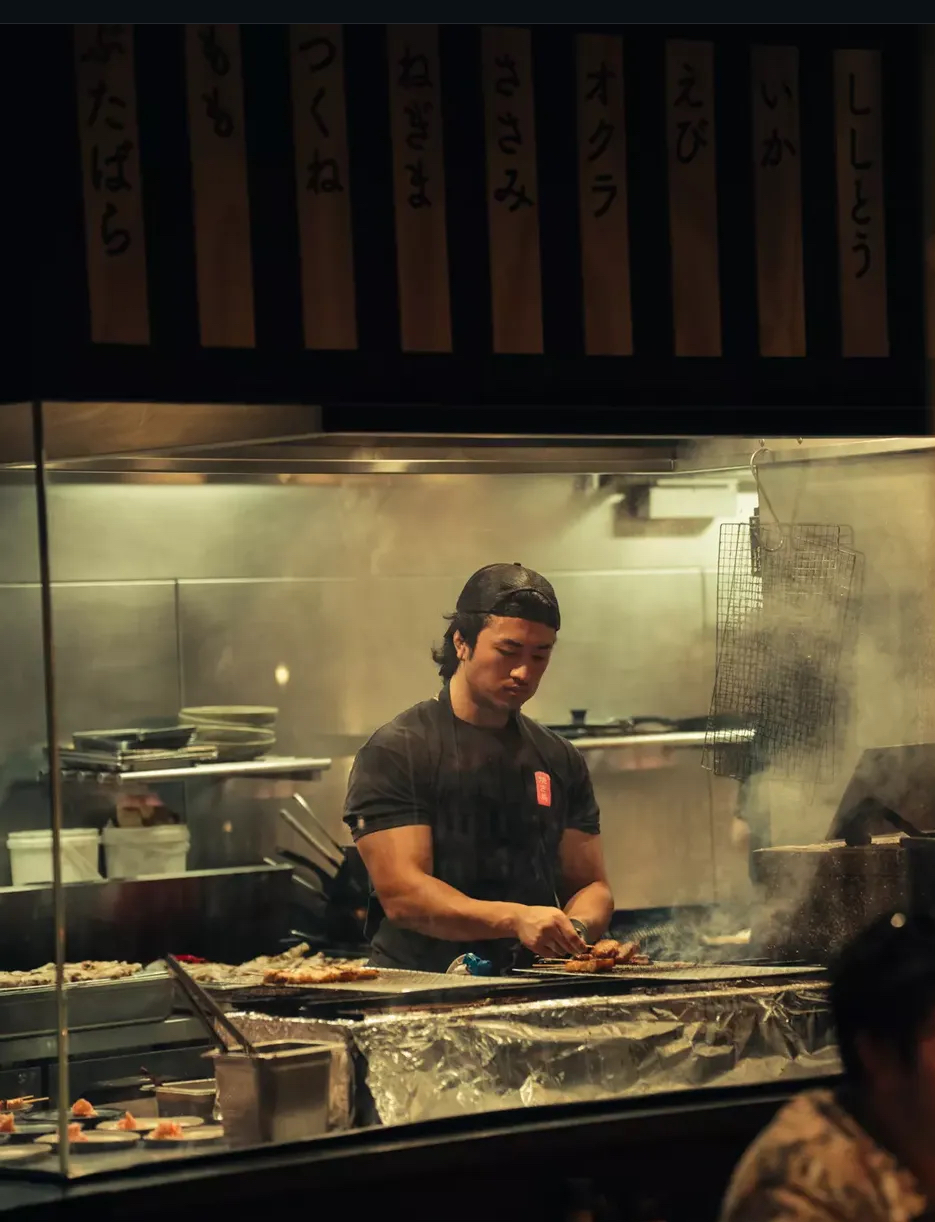
Using binchotan properly requires more than just buying premium charcoal. The grills themselves must be designed to withstand and harness these extreme temperatures.
We use grills imported from Japan, specifically engineered for binchotan use. Standard grills would warp, crack, or deteriorate under the sustained 1000-degree heat. Japanese yakitori grills are built with materials and construction methods that can handle this punishment night after night, year after year.
The grill design also matters for airflow, heat distribution, and accessibility. The chef needs to be able to position skewers at varying
heights above the charcoal, move them quickly when needed, and maintain consistent cooking conditions across the entire grilling surface.
These aren't features you find in consumer-grade equipment.
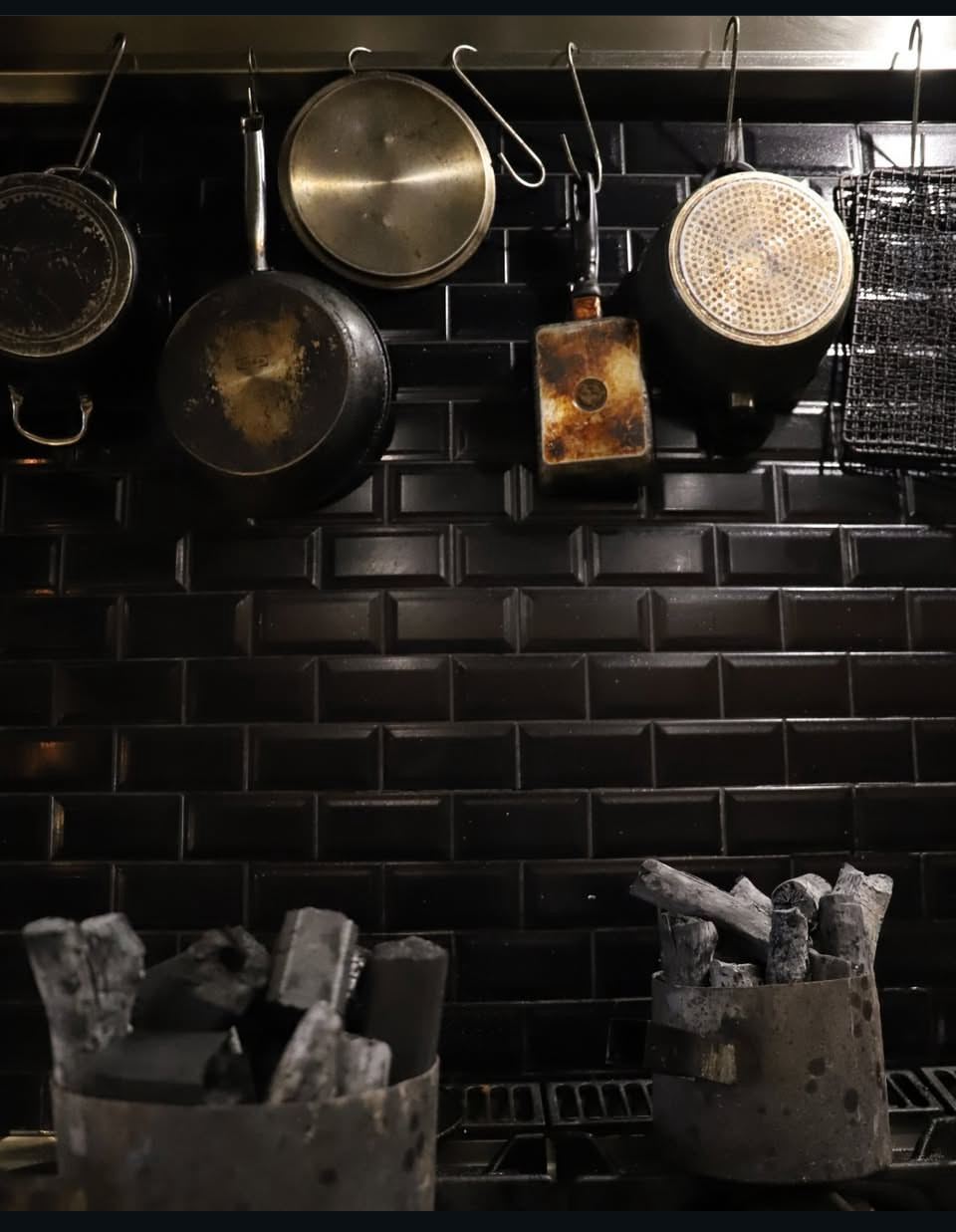
Let's address the elephant in the room: binchotan is expensive. Genuinely expensive. We're talking roughly triple the cost of conventional charcoal, and that's before factoring in the specialized grills, the training required, and the time investment in properly lighting and maintaining the charcoal throughout service.
When customers occasionally question yakitori pricing, this is part of the answer. You're not just paying for chicken on a stick. You're paying for:
This investment is why authentic yakitori tastes fundamentally different from casual grilled chicken. The difference is real, measurable,
and immediately apparent when you take that first bite.
You might wonder: couldn't you get similar results with gas grills or regular charcoal? I've been asked this countless times over 13 years. The honest answer is no—not if you want authentic yakitori.
Gas grills can achieve high temperatures, but they lack the radiant heat quality of binchotan. The heat distribution is different, the moisture retention isn't the same, and critically, you lose that subtle smoky aroma that's essential to the yakitori experience.
Regular charcoal burns cooler, produces more smoke, and doesn't provide the same clean heat. You can grill perfectly acceptable chicken over regular charcoal, but it won't be yakitori in the authentic sense. The texture, the juiciness, the flavour profile—they're all different.
Some restaurants use electric grills or gas with smoke chips, calling it yakitori. Technically, sure, it's grilled chicken on skewers. But
it's missing the heart of what makes yakitori special. It's like calling any sparkling white wine "champagne"—technically similar,
fundamentally different.
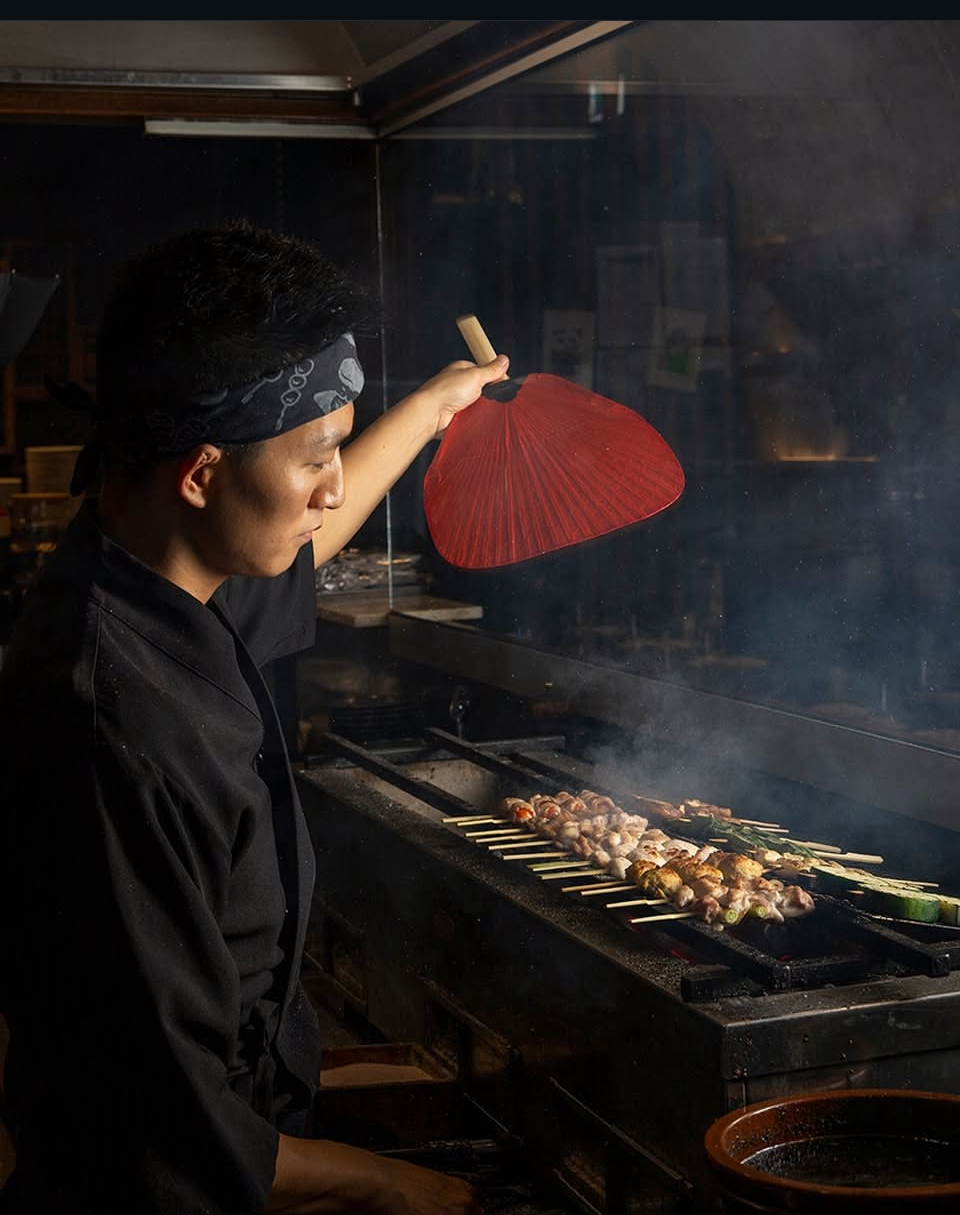
What makes binchotan truly special isn't just technical specifications—it's the complete sensory experience it creates.
That aroma you smell when approaching the restaurant? That's anticipation building before you've even sat down. The sight of intensely glowing charcoal when you're seated at the counter? That's theatre, showing you that something special is being prepared. The sound of skewers sizzling as they hit the grill? That's the promise of flavour to come.
When you finally taste the yakitori—the contrast between the lightly charred exterior and the juicy interior, that clean smoky flavour that enhances rather than masks the chicken, the way the meat slides off the skewer with perfect tenderness—that's the culmination of everything binchotan makes possible.
Binchotan has been used for yakitori in Japan for centuries because nothing else achieves the same results. Modern technology has given us many alternatives, but sometimes traditional methods endure because they simply work better.
At Bird's Nest, using binchotan isn't about being precious or unnecessarily traditional. It's about respecting the craft of yakitori and delivering the authentic experience that this style of cooking deserves. When you understand what binchotan brings to the table—the heat, the moisture retention, the clean smoke, the flavour—it becomes clear that there's no real substitute.
Yes, it's more expensive. Yes, it's more difficult to work with. Yes, it requires specialized equipment and trained staff. But when you
taste the difference, when you experience yakitori the way it's meant to be prepared, the investment makes sense.
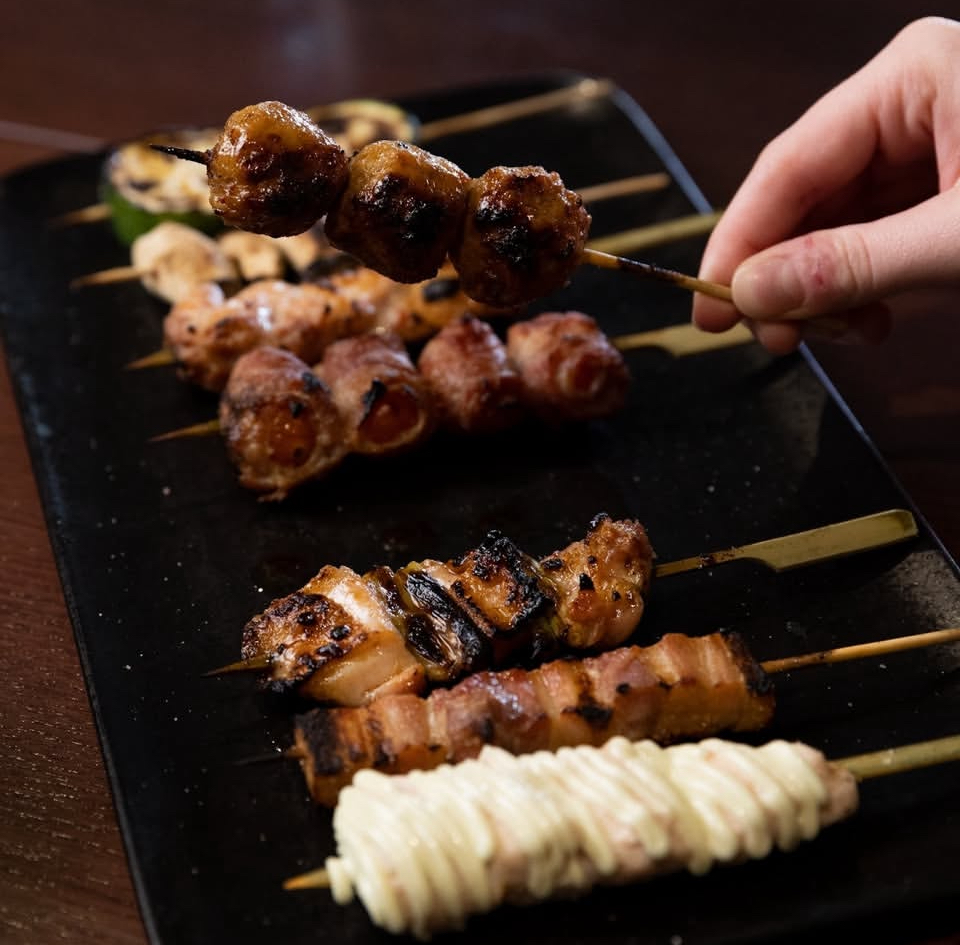
The next time you visit Bird's Nest, pay attention to that distinctive aroma as you approach. Watch the charcoal glowing intensely behind the counter. Notice how the chicken looks when it comes off the grill—that perfect char, the way it glistens with retained juices.
And when you take that first bite, remember: what you're tasting is the result of centuries-old tradition, premium materials, skilled technique, and a commitment to authenticity that refuses to take shortcuts. That's what binchotan brings to yakitori, and that's what makes it worth every degree of that 1000-degree heat.